Bishkek has begun preparations for the second Global Mountain Summit. It will take place in the capital of Kyrgyzstan in October 2027. Key issues on the agenda will be adaptation to changing living conditions caused by rising temperatures on the planet.
According to global institutions dealing with climate issues, if the Earth has warmed by an average of 1.3 – 1.5 degrees over the last 50 years, the process in mountainous regions is faster, about twice as fast. Moreover, as scientists note, the dangerous process has accelerated in recent decades, and now the temperature is rising at threatening rates. This is the main cause of glacier degradation, natural anomalies, destructive storms, or conversely, heat waves and droughts.
For 20 years, on various international platforms, primarily under the auspices of the United Nations, Kyrgyzstan has initiated measures to respond to climate risks and various adaptation programs to the new reality. At the initiative of our country, in 2022, the UN General Assembly declared the Decade of Action for Mountain Development. The Global Summit in Bishkek at the level of heads of state will not only sum up interim results but also begin a new stage in developing programs and projects aimed at mitigating the consequences of climate threats.
At one of the international meetings, President Sadyr Japarov spoke about the consequences of global warming that Kyrgyzstan has faced and the risks this will create in the future. Over several decades, our country has lost about 20% of glaciers that were in the ‘eternal’ category. The rate of their melting is such that by 2040, the republic may lose 40% of its water resources, and by the end of the century up to 80%. Probably, even non-experts understand that this will no longer be a crisis, but a catastrophe.
If mountainous countries lose their glaciers, many continental states in vast territories will be left without water. These spaces will become practically uninhabitable. Therefore, while the process has not become irreversible, Kyrgyzstan calls on the world community to take active action.
To adapt to new conditions, it is necessary not only to adapt but also to preserve economic potential. In mountainous states, it is necessary to introduce advanced developments in the field of green energy, improve and modernize hydraulic structures and irrigation networks. These are priority measures necessary for the rational use of transboundary river resources. Water must be conserved now so that with reduced flow, it is enough for human needs, livestock development, and agriculture. As experts note, preserving ecosystems in mountainous regions is a challenge and a question of sustainable development for all humanity.
As experts emphasize, issues of leveling climate risks and economic stability are closely intertwined. Implementing large-scale projects requires colossal resources, so the world community, supporting mountainous countries, invests in its own future.
Doctor of Economic Sciences Tolonbek Adyr ov focuses on the fact that mountain climate is unpredictable in itself, and under global warming, it becomes a factor of increased risk.
‘We have only about 5% of territories suitable for agriculture. But due to rock anomalies, a significant part of the harvest may be lost. The mountain ecosystem is very unpredictable.
Rivers formed in our mountains go far beyond our country; the entire region depends on them. Therefore, projects to preserve glaciers, introduce conservation technologies, and prudent use of water resources should be invested in by our partners. This directly affects the state of the economy and food security not only of Kyrgyzstan or Tajikistan but also of other countries in the region.
We must speak out for funds to support mountainous countries. We must propose preferential financing for the construction of the same hydroelectric power stations, mountain infrastructure. And, probably, it’s time to propose recognizing ecosystem services as an economic asset.
Water and glaciers are objects of international settlements. And service and sustainability are the subject of the contract. The second world mountain summit in Bishkek is a platform for negotiations where climate program financing is linked to global development as a whole,’ said Tolonbek Abdyrov.
In other words, in mountainous countries where the climate changes faster, action must be taken jointly and promptly. Investments in these territories must be directed on a priority basis because natural factors and conditions have developed in such a way that states where 90 percent or more are occupied by mountain ranges and ridges cannot be very rich by definition. They simply do not have enough resources to implement large-scale projects to preserve glaciers or combat climate change.
Therefore, if it is undesirable to build a thermal power plant in the region to reduce the anthropogenic effect, an alternative is needed. If a condition is put forward to reduce emissions from enterprises, there should also be certain compensation mechanisms for limiting production capacity. If there is a common task to preserve glaciers and transboundary river resources, it must be solved jointly.
Ecologist Bakytbek Saipbaev focuses on the fact that all types of work in mountainous regions have high cost. Due to climatic features, agriculture is risky. Due to the terrain, logistics is difficult, there are special conditions and requirements for construction, mining also imposes additional finances. That is, conducting any type of activity in the mountains, especially if it concerns large industrial facilities, entails increased costs.
Therefore, as the analyst emphasizes, in solving global-level tasks such as combating climate change, responsible representatives of the world community must participate.
‘Coordinated efforts are needed to maintain the ecological situation. Ecosystems of mountainous countries are very vulnerable; they are easily exposed to negative external influences. We see this in the example of how rapidly glaciers are degrading.
We talk about the need for large-scale environmental measures, restrictions imposed on production, compliance with increased requirements and regulations to reduce emissions; all this costs money. Therefore, of course, the first ones who should care about mountainous countries are those states that receive water from us. If we lose glaciers, living conditions in vast spaces will change dramatically. Probably, no one wants our region to turn into an arid desert,’ says Bakytbek Saipbaev.
The Government of Kyrgyzstan is already systematically preparing for the second Global Mountain Summit under the auspices of the UN. At the organizational committee meeting chaired by the head of the cabinet of ministers, it was noted that during the Decade of Mountain Development, several important initiatives were implemented in the republic.
Active development of renewable energy potential has begun, primarily the construction of dozens of HPPs. Under the national program ‘Zhasyl Muras,’ up to 8 million green plantings are planted annually, forming large forest arrays that absorb carbon emissions. By the summit, Kyrgyzstan will present other specific results of the work done to combat climate change. At the same time, as experts emphasize, to turn the situation around, projects to support mountainous regions need to be scaled up and not delayed in their implementation.
Tell us about your travel plans and we'll craft a personalized proposal within 24 hours. No pressure, no generic packages — just a genuine conversation about your dream trip.
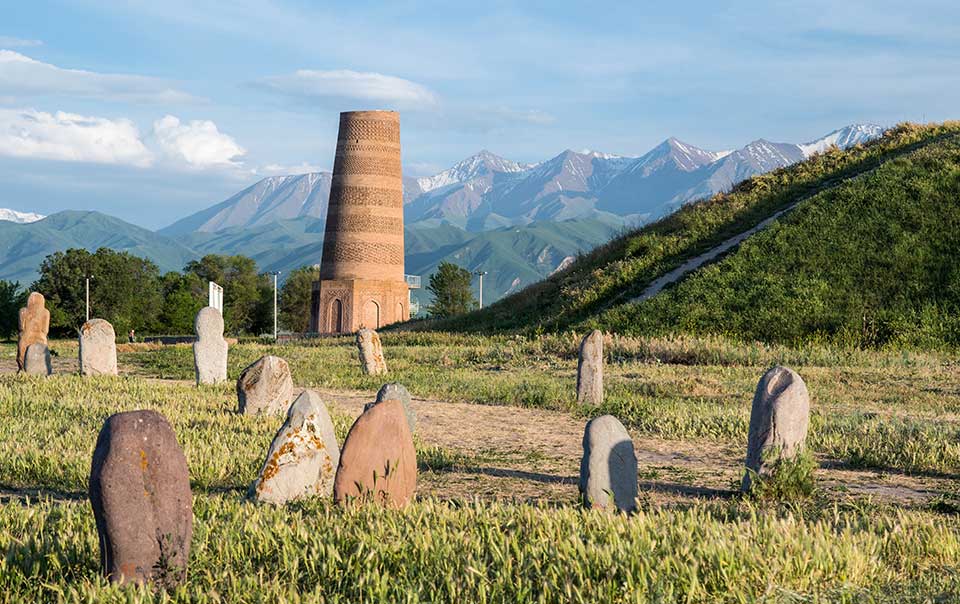
Perfect for culturally curious travelers who want more than a standard sightseeing trip. Ideal for those who want a balanced combination of nature, authentic nomadic life, UNESCO heritage cities, and real Silk Road history — all in one seamless journey across three countries.