In recent years, Central Asia has demonstrated steady growth in the tourism sector. On the current state, problems, and prospects for the industry’s development in the region’s countries, writes correspondent of ‘Kazinform’ Gulmira Abdrahmanova.
**Growth Indicators**
Central Asia is experiencing a real tourism boom. In 2024, the region was visited by 28.6 million foreign tourists — a record figure in the entire history of observations. The success is explained not only by natural and cultural wealth but also by the active efforts of countries to develop the industry.
In the first half of 2025, Kazakhstan was visited by 7.5 million foreign tourists, of which 5 million stayed in the country for more than a day. For the whole of 2024, this figure was 15.3 million people.
The total income of tourist facilities reached about $294 million, which is 25% more than the previous year. The most tourists came from China, India, Turkey, Germany, and South Korea.
In Kyrgyzstan, the popularity of ecotourism and active recreation is growing, especially among travelers from Europe and Asia.
In January–June 2025, the country was visited by almost 5 million foreigners (for the whole of 2024 — 8.86 million). Almost 90% of tourists arrived from Central Asian countries, mainly from Uzbekistan.
Uzbekistan is strengthening its position as a center of cultural tourism. Samarkand, Bukhara, and Khiva remain the most popular destinations. According to the National Committee for Statistics of the Republic of Uzbekistan, from January to August 2025, the country was visited by 7.5 million foreign tourists, which is 49% more than the previous year. The main flow comes from neighboring countries: Kyrgyzstan — 2.1 million people, Kazakhstan — 1.76 million, Tajikistan — 1.7 million. The growth is associated with visa regime liberalization and active promotion of historical heritage.
Tajikistan is betting on historical and cultural tourism. In the first six months of 2025, the country was visited by 761 thousand foreign tourists, which is 181 thousand more than the previous year. Most tourists are citizens of CIS countries (about 700 thousand), however, the number of guests from far abroad is also growing — almost 60 thousand people.
Tourism expert Maksat Usubaliev notes a noticeable growth in tourism sector indicators in Central Asian countries. According to him, the positive dynamics is due to the reduction of bureaucratic barriers and the activation of marketing campaigns, which has enhanced the region’s attractiveness for international travelers.
“Each Central Asian country has its strengths and specifics in tourism sector development. Today, there is active promotion of the region on external markets, and this is already yielding noticeable results. Central Asia is becoming increasingly attractive to tourists from far abroad. At the same time, high mutual tourist exchange between our states is maintained. Thus, in 2024, Kyrgyzstan was visited by about 9 million foreign citizens, of which 80% were tourists from Uzbekistan and Kazakhstan,” he noted.
The expert also noted that one of the key factors in the growth of tourist flow was the improvement of the visa policy of the region’s countries.
“In Kyrgyzstan, Kazakhstan, and Uzbekistan, the visa policy has noticeably liberalized. The list of countries whose citizens are allowed visa-free access to the region is expanding and gradually synchronizing. This is a good example of integration in such a sensitive area for tourism,” said Maksat Usubaliev.
**Contribution to the Economy and Investments**
Central Asian countries are actively investing in the development of their tourism sector, emphasizing both domestic and foreign investments.
In Kazakhstan, by the end of 2024, the volume of investments in fixed capital reached approximately $1.8 billion, which is 20.3% more than in 2023. From 2019–2024, more than 605 investment projects were implemented in the tourism sector with a total amount of $1.1 billion tenge, of which 87 investment projects were successfully completed in 2024.
In the first half of 2025, the total income of tourist facilities reached $293.8 million, which is 25% higher than the same period last year. The volume of investments in the tourism sector increased by 27% and amounted to $1.2 billion. The most significant growth in investments was recorded in Ulytau (+626%), Aktobe (+241%), Atyrau (+214%), and Kyzylorda (+97%) regions.
In Kyrgyzstan, from 2021 to 2024, more than $138.5 million in direct foreign investments (excluding outflow) were attracted to the tourism sector. The largest investment figure falls on 2022 — $49.8 million. The main investors from CIS countries in the tourism sector remain Russia ($7.6 million) and Kazakhstan ($4.2 million). Among other countries, the UAE ($32.1 million) and China ($10.2 million) stand out.
The share of tourism in the country’s GDP is steadily growing, reaching 4.3% ($344.3 million) in the first half of 2025. Investments in fixed capital for the construction of tourist facilities reached $129.2 million, which is 2.5 times more than in the same period of 2024. The main funds were directed to the construction and reconstruction of roads, hotels, boarding houses, and trade facilities.
Over the last 8 years, $6.5 billion in investments have been invested in Uzbekistan’s tourism industry, creating 130 thousand hotel places. According to the Tourism Committee, in 2024, the number of family guesthouses grew from 319 to 3.7 thousand, 110 new hotels and 110 hostels were built. 48 thousand jobs were created in the tourism industry. In 2025, 400 billion soums were allocated for infrastructure development, allowing 50 thousand citizens of the country to be employed.
In Tajikistan, for the implementation of the four-year tourism development program (2023–2026), more than $16.3 million is planned to be allocated from various sources, including private sector funds and several international organizations. The authorities are actively attracting external financing and investments. In 2019, the Asian Development Bank approved a grant of $10 million to support the tourism development project in the country.
**Role of UNESCO Heritage Sites**
UNESCO heritage sites in Central Asia play a key role in attracting tourists and shaping the region’s image as a unique cultural and natural destination.
**Kazakhstan** is represented by both cultural and natural sites:
* Mausoleum of Khoja Ahmed Yasawi (2003) — a monument of Timurid architecture.
* Petroglyphs of Tamgaly (2004) — Bronze Age rock images.
* Saryarka (2008) — steppes and lakes of Northern Kazakhstan with unique ecosystems.
* Routes of the Chang’an–Tianshan Corridor (2014) — ancient cities and sections of the Great Silk Road.
* Western Tian Shan (2016) — transboundary natural site.
* Temperate deserts of Turan (2023) — unique desert ecosystems.
**Kyrgyzstan** is represented by:
* Sulayman-Too Mountain in Osh (2009) — a sacred place on the Great Silk Road.
* Sections of the Chang’an–Tianshan Corridor routes (Suab, Nevaket, Balasagun, 2014).
* Natural reserves of the Western Tian Shan (Sary-Chelek, Besh-Aral, and Padyshatinsky, 2016).
**Uzbekistan** has seven sites: Itchan-Kala in Khiva (1990), historical centers of Bukhara (1993) and Shahrisabz (2000), the city of Samarkand (2001), Western Tian Shan (2016), Zeravshan–Karakum Corridor (2023), cold deserts of Turan (2023).
**Tajikistan** is represented by: the ancient city of Sarazm (2010), Tajik National Park (2013), Tugai forests of the ‘Tiger Balka’ reserve (2023), Zeravshan–Karakum Corridor (2023), and monuments of Ancient Khuttal (2025).
Experts note that inclusion in the UNESCO list enhances the region’s prestige, attracts investors, and contributes to heritage preservation. Transboundary sites such as the Great Silk Road and Western Tian Shan strengthen cooperation between Central Asian countries in the tourism sector.
**Problems and Challenges**
Despite progress, tourism development in the region faces a number of problems. The main obstacles are insufficient infrastructure, visa and administrative barriers, high prices with low service quality, shortage of qualified personnel, and weak promotion of the tourist product abroad.
The shortage of mid-range and budget hotels, uneven distribution of accommodation places, and poor road conditions are particularly acute. High airfare prices, weak development of transport networks, and outdated systems in some countries complicate travel between regional states.
The lack of a single visa for all regional states also limits tourist mobility and reduces the attractiveness of multi-country routes.
According to Maksat Usubaliev, there are still many problems in the industry. “It’s good that they have started talking about them openly. The main difficulties are related to organizational processes within the Central Asian countries themselves — differences in regulatory documents and remaining bureaucratic barriers,” the expert said.
**Prospects**
Experts emphasize that tourism development in the region depends on improving transport accessibility, enhancing service quality, active promotion on the international arena, and creating a favorable investment climate. An important role is played by cooperation between Central Asian countries, standardization, and the formation of joint tourist products to strengthen the region’s competitiveness.
According to the former Deputy Minister of Culture, Information, and Tourism of Kyrgyzstan Maksat Chakiyev, creating a single tourist space with a common visa could significantly increase the region’s competitiveness. The introduction of the Central Asia Visa will allow travelers to move freely between countries without issuing separate visas. The expert notes that for the successful implementation of the project, it is necessary to create a regional tourist organization that will coordinate the interaction of countries and ensure coordinated industry development. “At the initial stage, this role could be played by the Intergovernmental Commission on Tourism, operating on the basis of an agreement between countries under the management of national tourism ministries. In the future, the creation of a separate International Tourist Organization of Central Asia is planned. This will be a fully independent structure that can include not only states but also private sector representatives — tour operators, airlines, hotel chains. Among its main tasks are the development of tourism development strategies, promotion of a single Central Asian brand, and infrastructure development,” noted Maksat Chakiyev.
Co-chair of the Kyrgyzstan Resorts Association Azamat Zhamankulov, assessing the dynamics of the tourism industry in Central Asia, noted that in recent years, all regional countries have observed steady growth and positive structural changes.
“Central Asian states today pay special attention to tourism development: they expand infrastructure, simplify visa procedures. Most countries have a mutual visa-free regime, and high-quality marketing promotion of the region is actively carried out. Overall, business tourism is developing very dynamically. At key world tourist platforms and exhibitions, Central Asian countries regularly participate and promote themselves as a single region. With the opening of borders and border points between our countries, tourist safety has noticeably improved, border crossing procedures have been simplified, and the level of comfort has increased,” he emphasized.
It is noteworthy that in Kazakhstan, Kyrgyzstan, and Uzbekistan, large investment projects are being implemented today, and cluster development is being formed.
Tell us about your travel plans and we'll craft a personalized proposal within 24 hours. No pressure, no generic packages — just a genuine conversation about your dream trip.
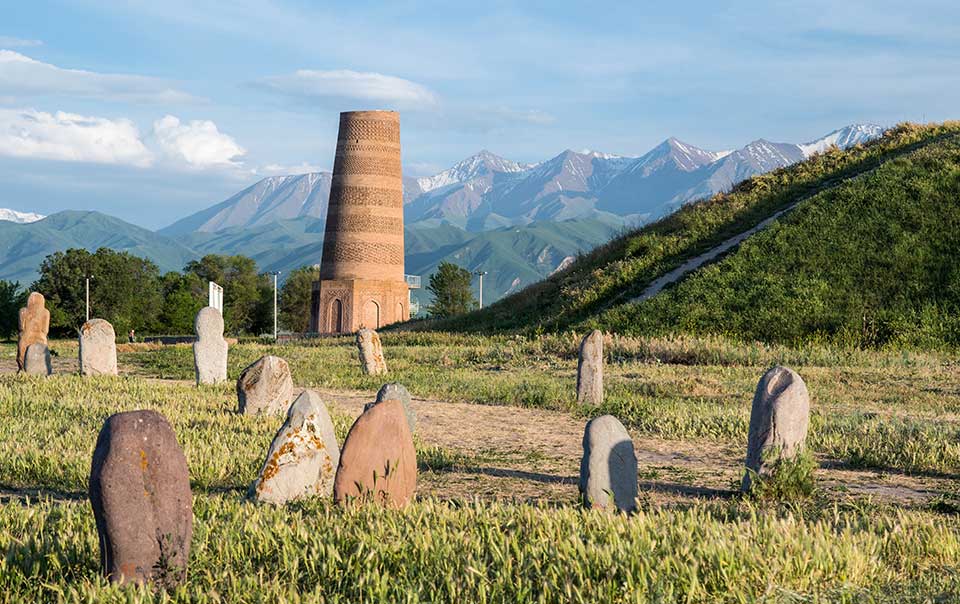
Perfect for culturally curious travelers who want more than a standard sightseeing trip. Ideal for those who want a balanced combination of nature, authentic nomadic life, UNESCO heritage cities, and real Silk Road history — all in one seamless journey across three countries.