The landscape and photographic works here are not just images of nature, but traces of time, human decisions, and their consequences. From a romanticized image of land development to an alarming view of ecological losses. This is the path offered by the exhibition ‘Another Landscape. Art, History, Ecology’, which opened at the Gapar Aitiev Kyrgyz National Museum of Fine Arts.
The exposition is unusual in that it combines painting and graphics from museum funds with works by contemporary invited artists and photographers. It tells how the landscape was represented in the work of artists from the museum’s collection—from the 1930s to the present day.
Divided into five thematic blocks, the exhibition shows how Kyrgyz artists addressed the landscape genre in different periods and contexts. For this dialogue, works by contemporary authors in various media are added to the painting and graphics from the museum funds.
Many of the presented works date back to the 1950s-1960s and reflect the large-scale development of that time.
Artists depicted infrastructure, agriculture, the growth of rural and urban areas, as well as scenes of everyday life. This activity influenced the overall appearance of the Kyrgyz Republic.
The exposition includes five sub-themes dedicated to various aspects of human activity: settlements, agriculture, water resources, industry, and female artists. In addition to painting and graphics, photo and video works are presented, in which the focus shifts to the consequences of urbanization and industrialization—primarily the damage to the environment.
Artists rethink the role of humans in nature: they no longer appear as creators living in harmony with the surrounding world, but as active destroyers or silent observers before whose eyes the tragedy of an ecological disaster unfolds.
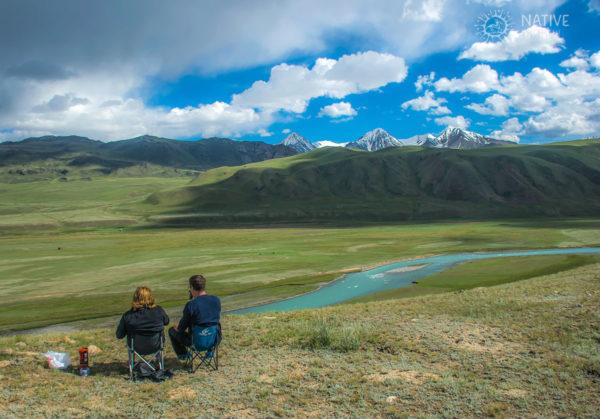
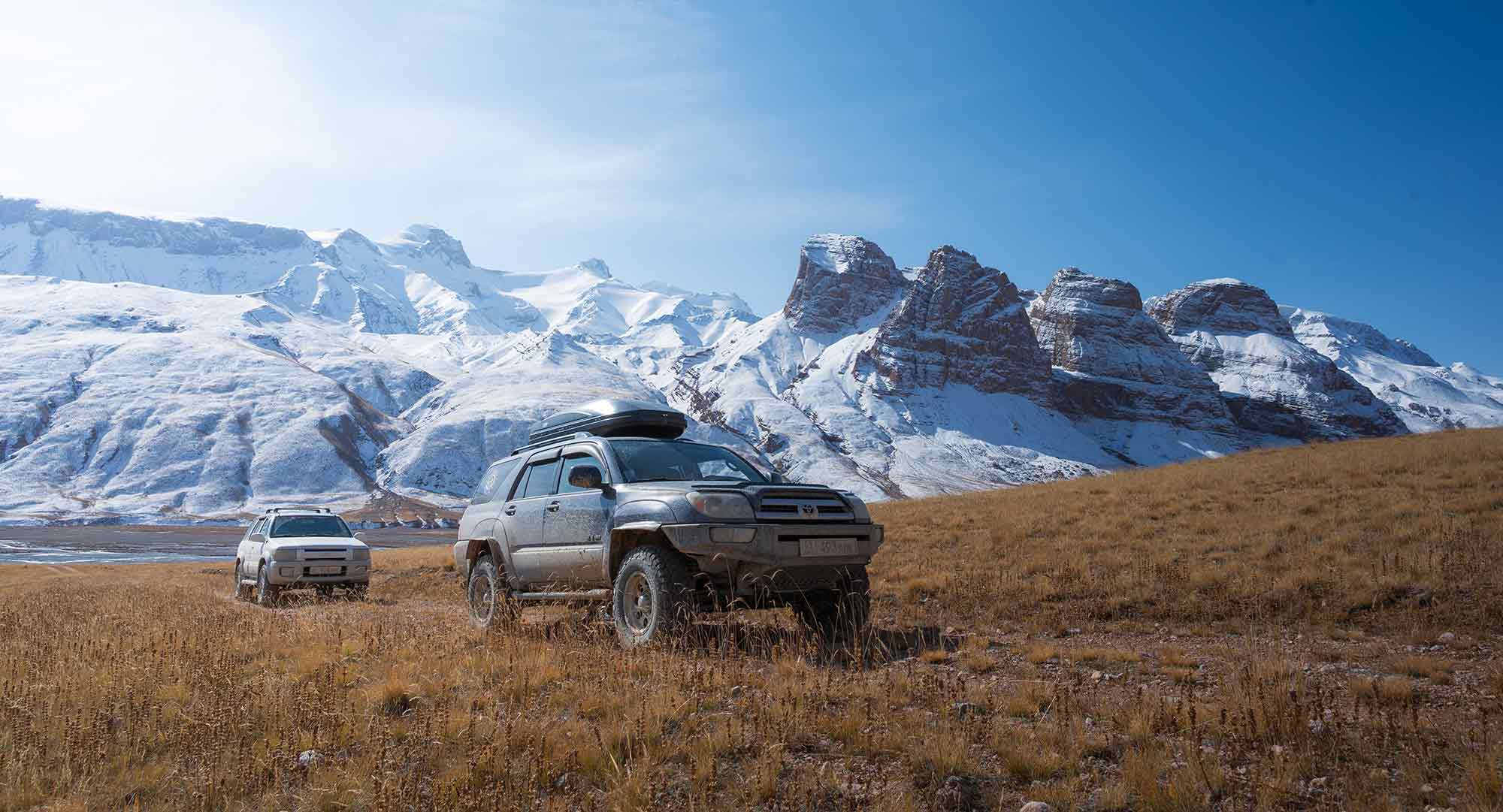
For Elmira Hasanova, participating in the exhibition is a great honor. For 13 years, she has been working as a guide and taking tourists to the most inaccessible and little-explored corners of the country. In parallel, she engages in creativity and photography, paying special attention not only to landscapes but also to people.
‘I am very interested in people’s stories and culture. In addition to landscapes, I look for portraits,’ shares Elmira.
After the pandemic, when tourism virtually stopped, she tried to change her field of activity but quickly realized that she could not live without traveling around her native Kyrgyzstan.
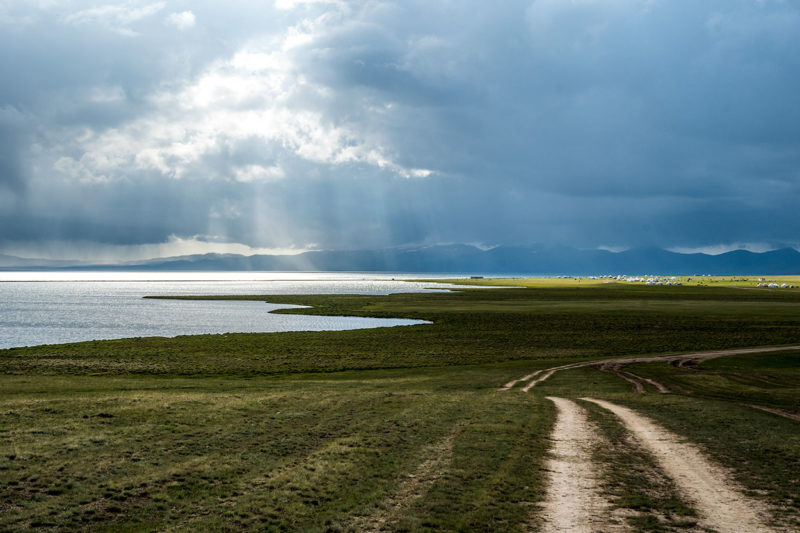
The author draws special inspiration from the republic’s nature. In the mountains, she sees character and mood—like in a person. Storms and changeable weather are closer to her than sunny calm.
Despite the fact that I have been to many places, there is always something new to discover. I never stop admiring it.
Elmira Hasanova
At the same time, she openly talks about environmental problems. Popular tourist locations suffer especially—garbage left by people spoils even the most beautiful landscapes.
‘Often tourists collect garbage in bags themselves because it’s simply impossible to be in the dirt,’ notes Elmira.
Speaking about climate change, she emphasizes the human factor: dust from dried deserts, including from Kazakhstan, settles on glaciers and accelerates their melting.
Today, one of the author’s most ambitious projects is to walk part of the route of the German traveler Gottfried Merzbacher and record how the glaciers have changed over more than a century. At the beginning of the 20th century, he paved the way to the foot of Khan-Tengri—a sacred peak that in Turkic tradition is called the ‘father of heaven’.
Having studied Merzbacher’s archival photographs, Elmira Hasanova was shocked by how much the glacial landscape has changed.
‘It was a shock to see how much we have already lost,’ she admits.
The exposition became a collaboration between the museum and art lovers from Western countries and turned into an experiment at the intersection of culture and ecology. Under the auspices of an environmental program, an exhibition was organized that united documentary projects dedicated to the impact of humans on the environment.
Documentary photographer Danil Usmanov presented a series of photo-landscapes created in different years. Despite visual differences, all works are united by one theme—the presence of humans.
These are photographs of nature taken at different times. But they are all united by people. Even if there are no people in the frame, it is still the consequences of their influence.
Danil Usmanov
The shots show gold mining in riverbeds, a destroyed bridge after a glacier collapse, consequences of global warming. The author recalls how, a few days after the glacier collapse, he went to the site to record landscape changes.
The exhibition also features shots of the Toktogul Reservoir with a noticeably lowered water level—another vivid evidence of climate change. A separate theme is the ecological situation in the capital—smog photos are adjacent to one of the most visually saturated series—shots of the city dump.
‘Today there is already a waste incineration plant, but before that, life was boiling. It was a place with its own rules, groups, caste system. Homeless people, families, workers, resellers—a whole world,’ shares Danil.
This series, according to him, became not just a documentary fixation but an attempt to show social and ecological reality without embellishments—as it was before it disappeared.
According to the exposition curator Alima Tokmergenova, the museum actively cooperates with external researchers. Foreign specialists come here for scientific work—writing candidate and doctoral dissertations. As part of this cooperation, Stephanie Dvorakus, a researcher from Massachusetts and Chicago Universities studying Kyrgyz art, came to the museum.
In the process of experience exchange between Stephanie, Alima Tokmergenova, and co-curator Meerim Emil kyzy, the idea of a new exposition was born.
We thought, what if we make an exhibition about the landscape and look at it from different sides—not only as an image of beautiful places but also as a witness to landscape changes from the 1930s of the last century to the present?
Alima Tokmergenova
Unlike artists of past eras who often romanticized reality, today’s authors strive to speak honestly—without embellishments. At the same time, the curator notes that even in documentary and sometimes alarming photographs, a sense of hope for the future is preserved.
The exposition features works from museum funds—collections of painting and graphics that are usually in closed storage and available to viewers only at exhibitions.
‘Looking at these photographs, hope appears that people will think about nature and ecology,’ emphasizes Alima Tokmergenova.
The exhibition ‘Another Landscape. Art, History, Ecology’ will delight visitors until February 25.
[ngg src=”random_images” display=”basic_slideshow” maximum_entity_count=”20″]
Tell us about your travel plans and we'll craft a personalized proposal within 24 hours. No pressure, no generic packages — just a genuine conversation about your dream trip.
Perfect for culturally curious travelers who want more than a standard sightseeing trip. Ideal for those who want a balanced combination of nature, authentic nomadic life, UNESCO heritage cities, and real Silk Road history — all in one seamless journey across three countries.